
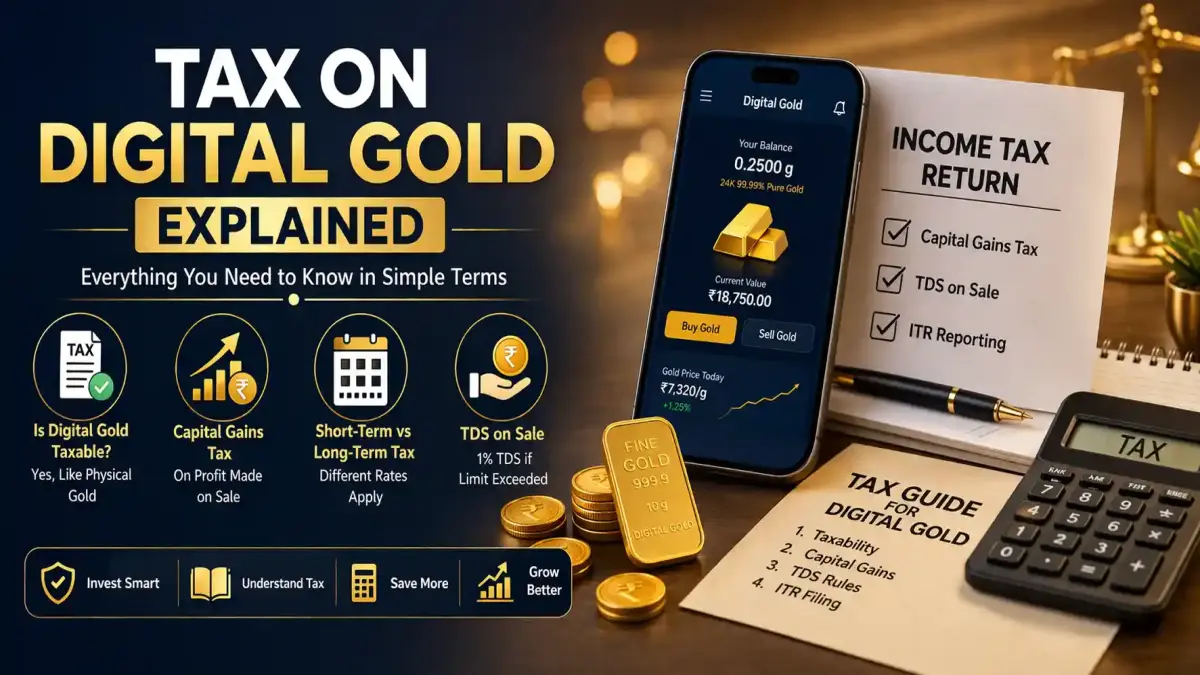
Tax on Digital Gold Explained
Table of Contents
Tax on Digital Gold Explained: Complete Guide for Smart Investors
Quick Answer (Featured Snippet)
Tax on digital gold in India is applied in two ways: Goods and Services Tax (GST) at the time of purchase and capital gains tax at the time of selling. Short-term gains are taxed as per income slab rates, while long-term gains are taxed at 20% with indexation benefits if held beyond the specified period.
Introduction: Why Understanding Digital Gold Tax is Important
Digital gold has become a popular investment option due to its convenience and accessibility. However, many investors focus only on buying and selling without understanding the tax implications. Ignoring taxation can lead to unexpected liabilities and reduced returns.
Whether you are a beginner investing small amounts or someone building long-term wealth through digital gold, understanding taxation is essential. Proper knowledge helps you plan better, reduce tax burden legally, and maximize your overall returns.
What is Digital Gold for Tax Purposes
For taxation, digital gold is treated similarly to physical gold. It is considered a capital asset, and any profit earned from selling it is subject to capital gains tax. This means that the duration for which you hold digital gold plays a major role in determining your tax liability.
Unlike stocks or mutual funds, digital gold does not fall under securities taxation rules. Instead, it follows the taxation structure applicable to physical assets like gold jewellery and coins.
GST on Digital Gold Purchase
When you buy digital gold, GST is applicable just like physical gold purchases. Currently, a 3% GST is charged on the value of gold at the time of purchase. This cost is added to your investment and slightly increases your overall purchase price.
Although GST may seem small, it impacts your break-even point. The gold price must rise enough to cover both GST and platform charges before you start making a profit.
Capital Gains Tax Explained
Short-Term Capital Gains (STCG)
If you sell digital gold within a short holding period, the profit is treated as short-term capital gain. This gain is added to your total income and taxed according to your income tax slab. For individuals in higher tax brackets, this can significantly reduce profits.
Long-Term Capital Gains (LTCG)
If digital gold is held for a longer duration, it qualifies for long-term capital gains tax. LTCG is taxed at 20% with indexation benefits. Indexation helps adjust the purchase price based on inflation, reducing taxable profit.
Understanding Holding Period
The holding period determines whether your gains are short-term or long-term. Investors who plan to hold gold for a longer duration benefit from lower tax rates and indexation.
This is why digital gold is often recommended for medium to long-term investment rather than short-term trading.
Real-Life Example of Tax Calculation
Consider an investor who buys digital gold worth ₹50,000. After two years, the value increases to ₹70,000. Since the holding period is long-term, indexation is applied, reducing taxable profit. The investor pays tax only on the adjusted gain, which results in lower tax liability.
On the other hand, if the same gold is sold within one year, the entire profit is taxed according to the investor’s income slab, leading to higher tax.
How to Save Tax on Digital Gold Legally
Tax planning is essential for maximizing returns. One effective strategy is to hold digital gold for the long term to benefit from lower tax rates. Avoid frequent buying and selling, as it increases tax liability.
Maintaining proper records of transactions is also important. This helps in accurate tax calculation and avoids issues during tax filing.
Common Mistakes Investors Make
- Ignoring GST impact while calculating returns
- Selling too early and paying higher taxes
- Not keeping transaction records
- Assuming digital gold is tax-free
Digital Gold vs Other Gold Investments (Tax Perspective)
Compared to Sovereign Gold Bonds, digital gold does not offer tax-free maturity benefits. Similarly, gold ETFs follow a similar tax structure but are regulated more strictly. Understanding these differences helps in better investment planning.
Step-by-Step Tax Filing Process
- Calculate total purchase cost including GST
- Determine selling price
- Identify holding period
- Apply relevant tax rules
- Report capital gains in income tax return
Expert Tips for Smart Investors
Investors should align their gold investment strategy with their financial goals. Digital gold should be used for diversification rather than as the primary investment. Always consider tax implications before making buying or selling decisions.
FAQ Section
Is digital gold taxable?
Yes, digital gold is taxable under GST at purchase and capital gains tax at sale.
What is the tax rate on digital gold?
Short-term gains are taxed as per income slab, while long-term gains are taxed at 20% with indexation.
Can I avoid tax on digital gold?
Tax cannot be avoided but can be minimized through long-term holding and proper planning.
Is GST refundable?
No, GST paid on digital gold purchase is not refundable.
Conclusion: Plan Smart to Maximize Returns
Understanding taxation is essential for making informed investment decisions in digital gold. While it offers convenience and flexibility, tax implications can impact overall returns significantly.
By holding investments for the long term, maintaining proper records, and planning transactions carefully, investors can reduce tax burden and maximize gains. Digital gold can be a valuable part of your portfolio when used strategically.







0 Comments