
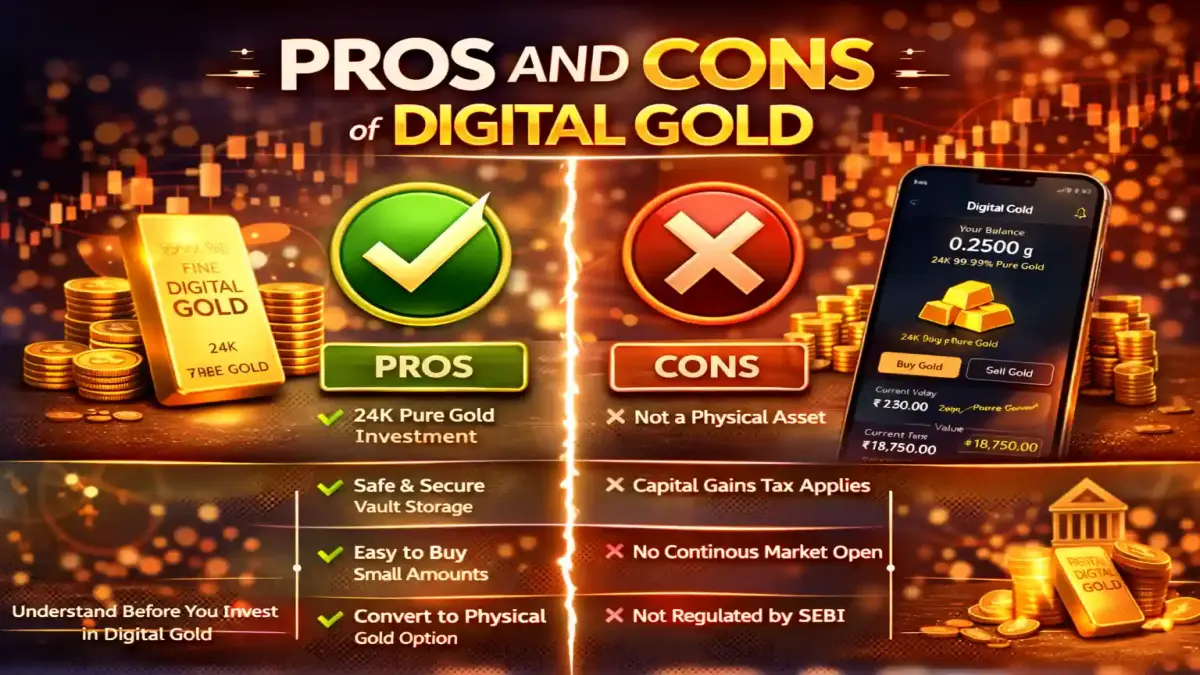
Pros and Cons of Digital Gold
Table of Contents
Pros and Cons of Digital Gold: Complete Guide for Smart Investors
Digital gold offers convenience, flexibility, and easy access for small investors, but it also comes with risks such as lack of regulation, storage limitations, and potential higher costs. Understanding both advantages and disadvantages helps investors make better financial decisions.
Introduction
Gold has always been considered a reliable asset for wealth preservation and financial security. Traditionally, people invested in physical gold such as jewellery, coins, and bars. However, with the advancement of technology and digital platforms, investing in gold has become more convenient through digital gold.
Digital gold allows investors to buy, sell, and store gold online without physically handling it. While it offers modern convenience, it also introduces certain risks that many investors overlook. Before investing, it is important to understand both the benefits and limitations of digital gold.
What is Digital Gold?
Digital gold is a form of investment where investors purchase gold online in small quantities. The purchased gold is stored securely in insured vaults by service providers. Investors can buy or sell gold anytime through mobile apps or websites.
This form of gold investment is especially popular among beginners and young investors who prefer convenience and flexibility.
Advantages of Digital Gold
1. Easy Accessibility
One of the biggest advantages of digital gold is its accessibility. Investors can start with a very small amount, making it ideal for beginners. There is no need to visit a physical store or deal with storage issues.
2. Convenience and Flexibility
Digital gold can be bought and sold instantly using mobile apps. This flexibility allows investors to react quickly to market changes and manage their investments efficiently.
3. No Storage Hassles
Unlike physical gold, digital gold does not require personal storage. It is stored in secure vaults, reducing the risk of theft or damage.
4. Transparency in Pricing
Digital gold prices are linked to real-time market rates, ensuring transparency. Investors can track price movements easily and make informed decisions.
5. Option to Convert into Physical Gold
Many platforms allow investors to convert digital gold into physical gold when needed. This adds flexibility to the investment.
Disadvantages of Digital Gold
1. Lack of Regulation
One of the major concerns with digital gold is the lack of strict regulatory framework. Unlike Gold ETFs, digital gold is not fully regulated by financial authorities, which increases risk.
2. Storage Limitations
Some providers offer free storage only for a limited period. After that, additional charges may apply, increasing the overall cost of investment.
3. Higher Costs
Digital gold includes GST, spread charges, and sometimes storage fees. These costs can reduce overall returns, especially for long-term investors.
4. Liquidity Depends on Platform
Although digital gold is generally liquid, the ease of selling depends on the platform. Any technical issue or restriction can affect liquidity.
5. No Passive Income
Unlike some financial instruments, digital gold does not generate interest or dividends. Returns depend solely on gold price appreciation.
Real-Life Example
Consider an investor who starts investing small amounts in digital gold monthly. Over time, the investment grows steadily due to rising gold prices. However, when the investor sells, GST and other charges reduce the overall profit.
This example highlights the importance of understanding costs and planning investments accordingly.
Digital Gold vs Physical Gold
Digital gold offers convenience, while physical gold provides emotional value and direct ownership. Investors must choose based on their priorities.
Digital Gold vs Gold ETF
Gold ETFs are more regulated and suitable for long-term investors, while digital gold is more convenient for small, flexible investments.
Who Should Invest in Digital Gold?
Digital gold is suitable for beginners, small investors, and those who prefer convenience. It is also useful for short-term or emergency investments.
Who Should Avoid Digital Gold?
Investors looking for long-term regulated investments or lower costs may prefer alternatives like Gold ETFs or Sovereign Gold Bonds.
Expert Tips
- Invest with trusted platforms only
- Consider long-term strategy
- Track costs and charges
- Diversify investments
Common Mistakes
- Ignoring hidden charges
- Investing without research
- Over-dependence on one asset
FAQ Section
Is digital gold safe?
It is relatively safe but depends on the provider’s reliability.
Can I sell digital gold anytime?
Yes, but it depends on platform availability.
Is digital gold better than physical gold?
It depends on investment goals and convenience preference.
Does digital gold give returns?
Returns depend on gold price increase.
Conclusion
Digital gold is a modern investment option that offers convenience and flexibility. However, it also comes with certain risks and costs. Understanding both pros and cons is essential for making informed investment decisions.
Investors should evaluate their financial goals, risk tolerance, and investment horizon before choosing digital gold. A balanced approach with proper planning can help maximize benefits while minimizing risks.







0 Comments