
Platinum Investment Guide 2026: Is It Better Than Gold?
Table of Contents
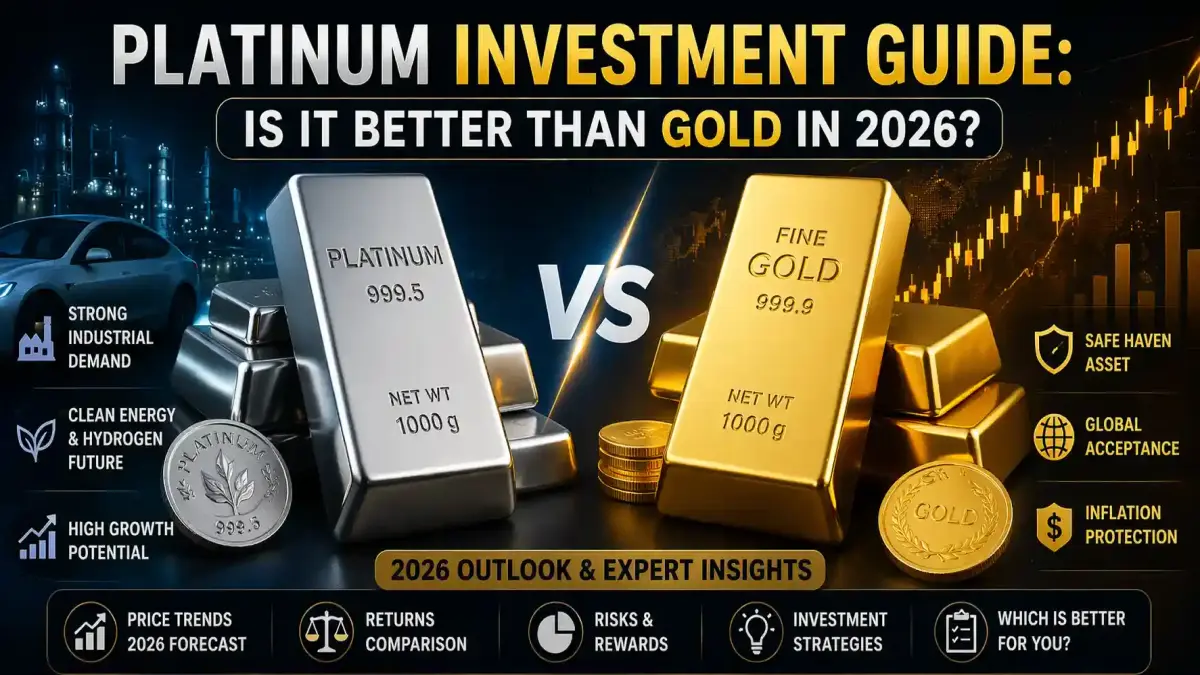
Platinum Investment Guide: Is It Better Than Gold in 2026?
Is Platinum Better Than Gold in 2026?
Platinum offers higher growth potential due to industrial demand, while gold provides stability and safety, making both valuable for different investment goals.
Precious metals have long been a cornerstone of investment strategies worldwide. While gold has traditionally dominated the market as a safe-haven asset, platinum has emerged as an intriguing alternative for investors seeking growth opportunities. In 2026, the debate between platinum and gold has become more relevant than ever due to shifting economic conditions, technological advancements, and evolving market dynamics.
Understanding whether platinum is better than gold requires a comprehensive analysis of their characteristics, market behavior, and future potential. Both metals have unique advantages and risks, and their performance depends on various factors, including economic conditions, industrial demand, and investor sentiment.
Understanding Gold as an Investment
Gold has been used as a store of value for centuries. It is widely recognized and accepted globally, making it one of the most reliable investment assets. During times of economic uncertainty, inflation, or geopolitical tensions, gold tends to perform well as investors seek safety.
In 2026, gold continues to benefit from its safe-haven status. Central banks hold significant gold reserves, and investors rely on it to protect their wealth during volatile market conditions.
Advantages of Gold
- High stability and low volatility
- Strong safe-haven demand
- Global acceptance
- Protection against inflation
Limitations of Gold
- Limited short-term growth potential
- No regular income generation
Understanding Platinum as an Investment
Platinum is a rare and valuable metal with significant industrial applications. It is widely used in automotive catalytic converters, electronics, and emerging technologies such as hydrogen fuel cells.
Unlike gold, platinum’s price is heavily influenced by industrial demand. This makes it more volatile but also provides opportunities for higher returns during periods of economic growth.
Advantages of Platinum
- High growth potential
- Increasing industrial demand
- Rarity and limited supply
Limitations of Platinum
- Higher volatility
- Dependence on industrial demand
- Less investor awareness compared to gold
Key Differences Between Gold and Platinum
- Gold: Safe-haven asset, stable prices
- Platinum: Industrial metal, higher volatility
- Gold: Driven by economic uncertainty
- Platinum: Driven by industrial demand
Market Trends in 2026
In 2026, global markets are influenced by economic recovery, technological advancements, and changing energy trends. These factors have a significant impact on both gold and platinum prices.
Gold remains strong due to ongoing uncertainties, while platinum is gaining attention due to increasing demand in industries such as automotive and clean energy.
Role of Industrial Demand
Industrial demand is the primary driver of platinum prices. The automotive industry, in particular, uses platinum in catalytic converters to reduce emissions. Additionally, the growing interest in hydrogen fuel cells is expected to boost demand for platinum.
Gold, on the other hand, has limited industrial use, making its price less dependent on economic growth.
Impact of Inflation
Inflation affects both metals, but gold is more directly influenced as it is widely used as a hedge against inflation. Platinum can also benefit indirectly through increased industrial demand during economic growth.
Supply Constraints
Platinum is rarer than gold and is primarily mined in a few regions. This limited supply can lead to significant price increases when demand rises.
Gold supply is also limited, but its global availability and recycling make it more stable.
Short-Term vs Long-Term Investment
In the short term, platinum may offer higher returns due to its volatility. In the long term, gold provides stability and consistent value growth.
Investors should align their choices with their risk tolerance and investment goals.
Risks to Consider
- Market volatility
- Economic downturn affecting industrial demand
- Geopolitical uncertainties
Investment Strategies for 2026
Diversification
Including both gold and platinum in a portfolio can provide a balance of stability and growth.
Long-Term Focus
Holding precious metals for the long term can help reduce the impact of short-term fluctuations.
Market Awareness
Staying informed about economic and industrial trends is essential for making smart investment decisions.
Future Outlook
The future of platinum looks promising due to its increasing role in industrial applications and clean energy technologies. Gold will continue to be a reliable asset for wealth preservation.
Both metals are expected to play important roles in investment portfolios, depending on market conditions.
Conclusion
Platinum and gold each have unique strengths and weaknesses. While gold offers stability and safety, platinum provides growth potential driven by industrial demand. In 2026, the choice between the two depends on individual investment goals and risk tolerance.
A diversified approach that includes both metals is likely to provide the best results, combining the benefits of stability and growth in an uncertain financial landscape.






0 Comments