Latest Gold & Silver Price Trends 2026: What Investors Must Know
Table of Contents
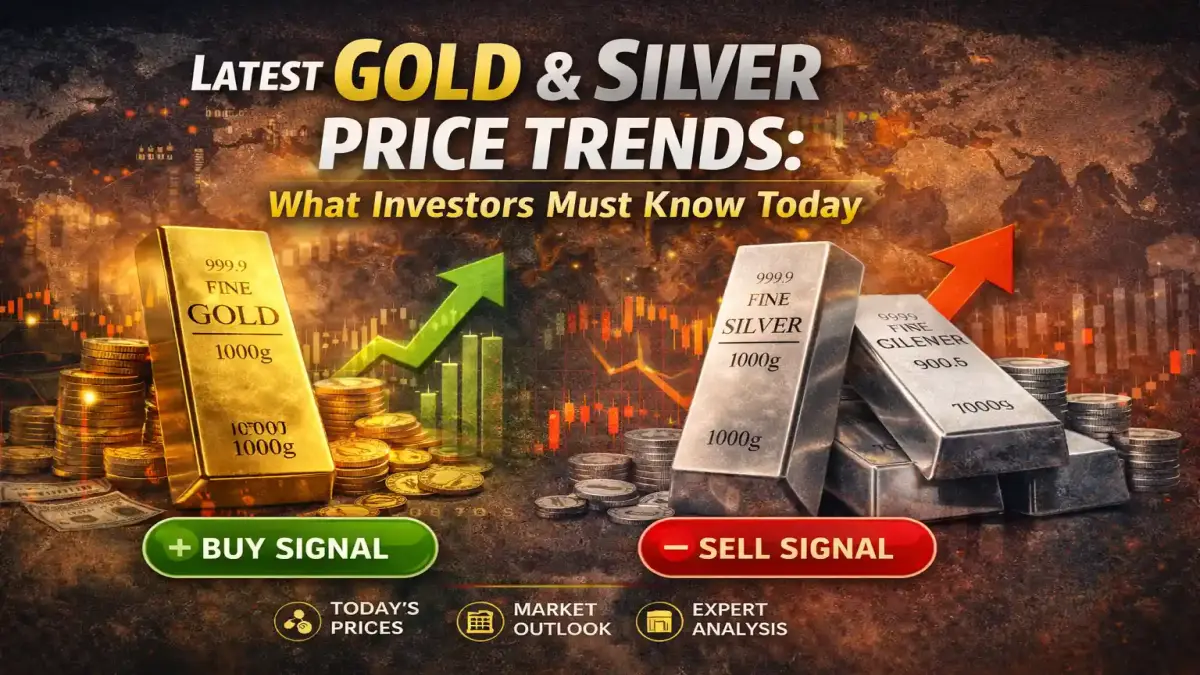
Latest Gold & Silver Price Trends: What Investors Must Know Today
What Are the Latest Gold and Silver Price Trends?
Gold remains stable with strong safe-haven demand, while silver shows higher volatility driven by industrial demand and economic recovery trends.
Gold and silver have always been among the most closely watched assets in the global financial market. These precious metals are not just commodities; they serve as indicators of economic health, investor sentiment, and inflation trends. In today’s rapidly changing financial environment, understanding the latest gold and silver price trends is essential for investors looking to protect and grow their wealth.
In 2026, global markets are influenced by multiple factors, including inflation concerns, interest rate fluctuations, geopolitical tensions, and technological advancements. These factors play a crucial role in determining the price movements of gold and silver. While gold is traditionally viewed as a safe-haven asset, silver has a dual role as both an investment and an industrial metal. This distinction leads to different price behaviors and investment opportunities.
Current Gold Price Trends
Gold prices in 2026 continue to show resilience, supported by ongoing economic uncertainties and inflation concerns. Investors around the world are increasingly allocating a portion of their portfolios to gold as a hedge against risk.
One of the key drivers of gold prices is inflation. As the cost of living rises, the purchasing power of money declines, making gold more attractive. Additionally, central banks continue to hold and accumulate gold reserves, which supports long-term demand.
Another important factor is interest rates. When interest rates are low, gold becomes more appealing because it does not yield interest but retains value. In contrast, rising interest rates can put pressure on gold prices as investors shift towards income-generating assets.
Current Silver Price Trends
Silver prices tend to be more volatile than gold due to their dual nature. In addition to being an investment asset, silver is widely used in industrial applications such as electronics, solar energy, and manufacturing.
In 2026, the growing demand for renewable energy and technological advancements has increased the industrial demand for silver. This has contributed to upward price momentum. However, economic slowdowns can reduce industrial demand, leading to price fluctuations.
Silver’s volatility can create opportunities for investors seeking higher returns, but it also comes with increased risk.
Gold vs Silver: Key Differences in Trends
- Gold: Stable, safe-haven asset with lower volatility
- Silver: Higher volatility due to industrial demand
- Gold: Driven by macroeconomic factors
- Silver: Influenced by both economy and industry
Factors Driving Gold and Silver Prices Today
1. Inflation
Inflation remains one of the strongest drivers of gold and silver prices. As inflation rises, investors seek assets that can preserve value, increasing demand for precious metals.
2. Interest Rates
Interest rate changes directly impact gold and silver prices. Lower rates support higher metal prices, while higher rates can reduce demand.
3. Global Economic Conditions
Economic uncertainty, including recessions and slow growth, increases demand for gold as a safe-haven asset.
4. Industrial Demand
Silver’s price is heavily influenced by industrial demand, especially in sectors like renewable energy and electronics.
5. Geopolitical Events
Conflicts and global tensions create uncertainty, driving investors towards gold and, to some extent, silver.
Short-Term Market Trends
In the short term, gold prices are expected to remain stable with slight upward movement due to continued demand for safe assets. Silver may experience higher fluctuations due to changes in industrial demand and economic conditions.
Short-term traders often take advantage of these price movements, but this approach requires careful analysis and risk management.
Long-Term Market Outlook
In the long term, both gold and silver are expected to perform well, supported by global economic trends and increasing demand. Gold will likely maintain its position as a stable investment, while silver may offer higher growth potential.
Investors with a long-term perspective can benefit from holding these assets as part of a diversified portfolio.
Investment Strategies for Today’s Market
Diversification
Including both gold and silver in your portfolio can help balance risk and return. Gold provides stability, while silver offers growth opportunities.
Regular Investment
Investing regularly helps in averaging costs and reducing the impact of market volatility.
Long-Term Focus
Focusing on long-term trends rather than short-term fluctuations can improve investment outcomes.
Market Monitoring
Staying informed about market trends and economic developments is essential for making smart investment decisions.
Advantages of Investing in Gold and Silver
- Protection against inflation
- High liquidity
- Global acceptance
- Diversification benefits
Risks to Consider
- Price volatility (especially silver)
- No regular income generation
- Market uncertainty
Future Trends to Watch
Key trends to watch in 2026 include rising inflation, central bank policies, technological advancements, and global economic conditions. These factors will continue to shape gold and silver prices.
Investors who stay informed and adapt to changing conditions will be better positioned to benefit from these trends.
Conclusion
Gold and silver remain essential assets in today’s financial landscape. While gold provides stability and protection, silver offers growth potential driven by industrial demand. Understanding the latest price trends and market drivers is crucial for making informed investment decisions.
By adopting a balanced and disciplined approach, investors can effectively use gold and silver to achieve long-term financial goals and navigate market uncertainties.






0 Comments