
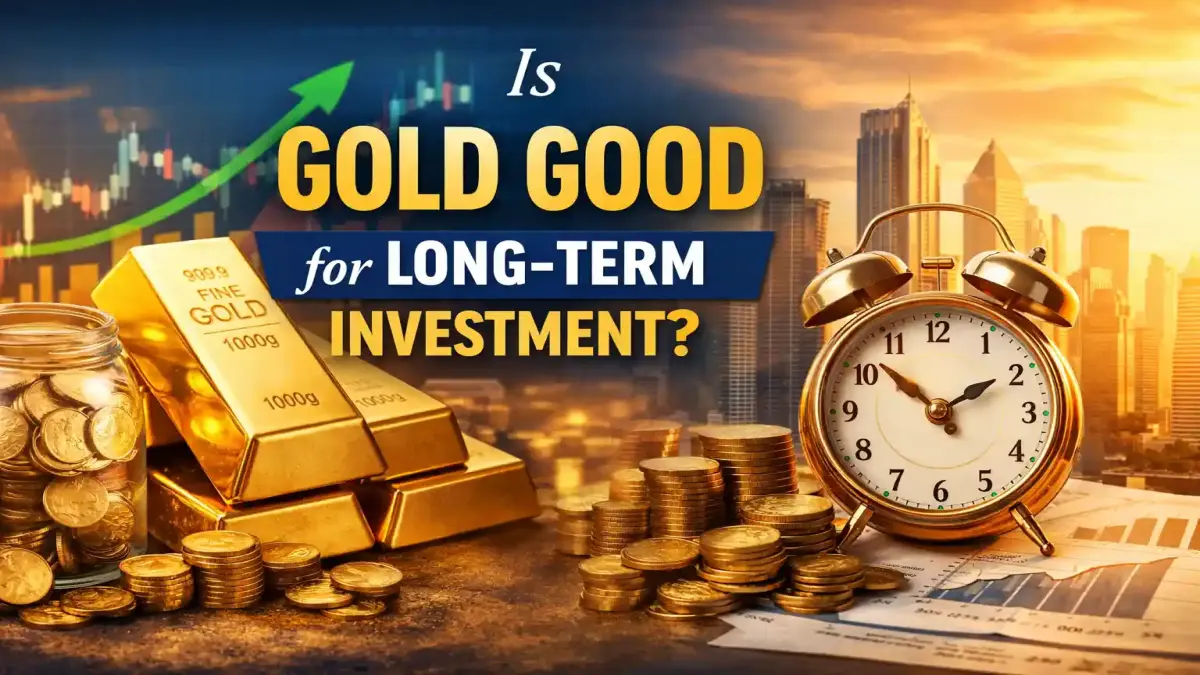
Is Gold Good for Long-Term Investment? Honest Guide for Smart Investors
Table of Contents
Is Gold Good for Long-Term Investment? A Real-World Perspective
When people think about long-term investment in India, gold is often one of the first options that comes to mind. Not because of marketing or financial advisors, but because of tradition, trust, and experience passed down through generations. Many families have stories of how gold helped them during difficult times, whether it was a financial emergency, a medical need, or a business opportunity. But in today’s modern financial world filled with stocks, mutual funds, and digital assets, an important question arises: does gold still make sense as a long-term investment, or is it just an emotional attachment?
To answer this honestly, we need to move beyond myths and look at how gold actually behaves over time, how it compares with other investments, and how real investors use it in their financial planning. This is not about blindly saying gold is good or bad. It is about understanding where it fits and how to use it wisely.
The Real Reason People Trust Gold
Gold is not just another investment. It is one of the few assets in the world that has survived wars, economic collapses, currency failures, and political instability. While companies can shut down and currencies can lose value, gold has consistently retained its worth. This long history creates a psychological sense of safety that very few assets can match.
For example, during periods when stock markets crash or inflation rises sharply, people naturally move towards gold. This increase in demand pushes gold prices upward, helping investors protect their wealth. This behavior has been repeated across decades and across countries.
Gold Does Not Make You Rich Quickly
One of the biggest misunderstandings about gold is that it can rapidly grow your wealth. In reality, gold is not designed for aggressive growth. It does not double your money quickly, and it does not generate monthly income. Instead, gold works silently in the background, protecting your money from losing value.
If you look at long-term data, gold typically provides steady but moderate returns. It may not outperform stocks in a booming economy, but it performs strongly when other investments struggle. This makes it more of a defensive asset than a growth asset.
A Practical Example from Real Life
Imagine two friends who started investing ten years ago. One invested all his money in stocks, while the other divided his investments between stocks and gold. During market crashes, the first investor saw significant losses and felt stressed. The second investor, however, experienced smaller losses because gold prices increased during the same period.
This simple example shows how gold acts as a stabilizer. It does not replace high-growth investments, but it protects you when things go wrong.
Where Gold Actually Helps in Long-Term Planning
Gold plays a very specific role in long-term financial planning. It acts as insurance for your portfolio. Just like you buy insurance hoping you never need it, you invest in gold hoping markets stay stable, but benefiting when they do not.
It is especially useful for people who want peace of mind. If you are someone who cannot tolerate big market fluctuations or panic during downturns, having gold in your portfolio can reduce stress and help you stay invested for the long term.
The Problem with Over-Investing in Gold
While gold is valuable, relying too much on it can limit your financial growth. Many people make the mistake of putting a large portion of their savings into gold because it feels safe. However, this safety comes at a cost. Since gold does not generate income or high returns, your overall wealth may grow slowly.
A balanced approach is always better. Gold should support your portfolio, not dominate it.
Different Ways to Invest in Gold Today
Unlike earlier times when gold investment meant buying jewelry or coins, today investors have multiple options. Digital gold allows you to buy small quantities without storage issues. Gold ETFs offer market-linked pricing with high liquidity. Sovereign gold bonds provide additional interest income along with price appreciation.
Each option has its own advantages, and choosing the right one depends on your goals. For long-term investment, modern options are often more efficient than physical gold.
Understanding the Risk Side of Gold
Many people assume gold is completely risk-free, which is not true. Gold prices can fluctuate, sometimes remaining flat for years. If you invest at a peak price, it may take time to recover your returns.
Another hidden risk is emotional buying. People often buy gold during price spikes due to fear of missing out. This can reduce long-term profitability. Smart investors avoid this by investing gradually instead of making large one-time purchases.
When Gold Makes the Most Sense
Gold is most useful when you are planning for long-term financial stability rather than quick profits. It works well in uncertain economic conditions, during inflation, or when markets are volatile. It is also a good option for diversifying your investments.
If your goal is to protect your savings and reduce risk, gold is a strong choice. If your goal is rapid wealth creation, you may need other assets along with gold.
A Smart Strategy That Actually Works
Instead of asking whether gold is good or bad, a better question is how much gold you should own. Most experienced investors do not put all their money into one asset. They spread their investments across different options to balance risk and return.
A small allocation to gold can significantly improve the stability of your portfolio. It acts as a cushion during downturns while allowing other investments to grow during good times.
Common Mistakes New Investors Make
Many beginners treat gold as a guaranteed profit-making asset, which leads to unrealistic expectations. Others buy jewelry thinking it is an investment, ignoring making charges and resale value loss. Some investors also ignore better alternatives like bonds or ETFs.
Avoiding these mistakes can make a huge difference in your long-term results.
Final Thoughts: Is Gold Really Worth It?
Gold is not a magic investment that will make you rich overnight, but it is one of the most reliable assets for preserving wealth. Its true strength lies in stability, not speed. It protects your money when other investments fail and gives you confidence during uncertain times.
The smartest investors do not rely only on gold, but they also do not ignore it. They use it as a foundation for financial security while exploring other opportunities for growth. If used correctly, gold can play a powerful role in building a strong and balanced financial future.






0 Comments