
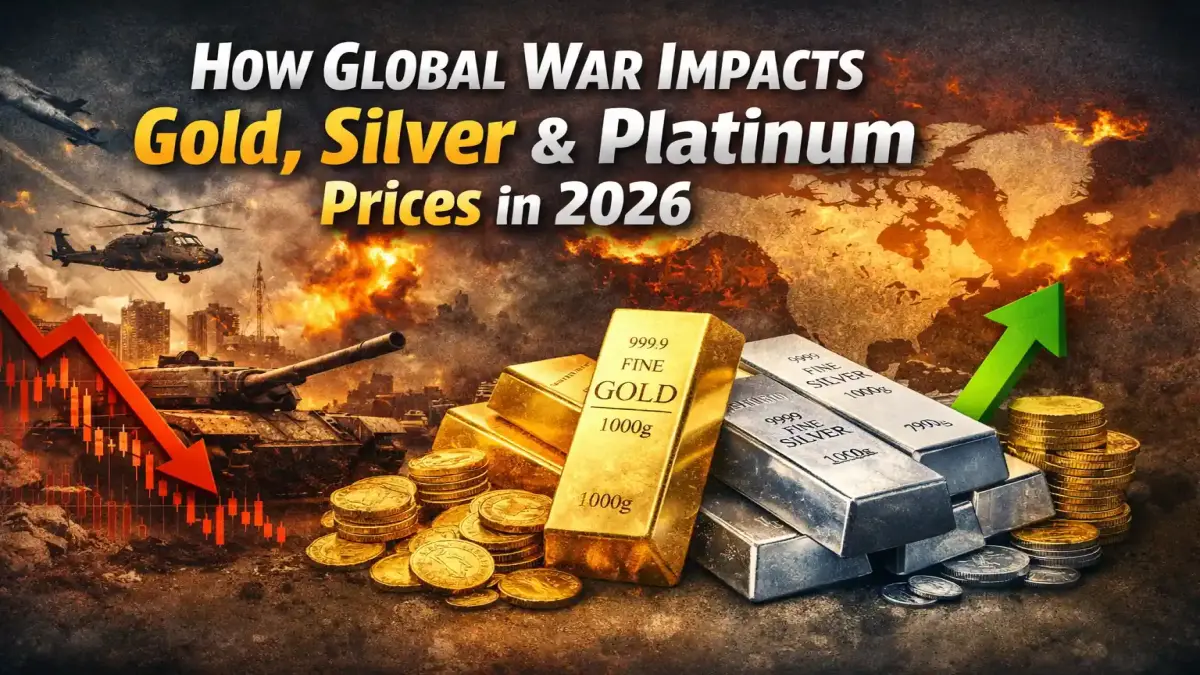
How Global War Impacts Gold, Silver & Platinum Prices in 2026
Table of Contents
How Global War Impacts Gold, Silver & Platinum Prices in 2026
What Happens to Gold, Silver and Platinum Prices During War?
During global wars, gold prices usually rise as investors seek safety, while silver and platinum react based on both investment demand and industrial usage changes.
Global conflicts have always played a significant role in shaping financial markets, especially the prices of precious metals such as gold, silver, and platinum. In 2026, with increasing geopolitical tensions and economic uncertainties, the relationship between war and metal prices has become even more important for investors to understand. These metals are not only valuable commodities but also indicators of global economic health and investor sentiment.
War creates uncertainty, disrupts supply chains, and affects currency stability. As a result, investors often shift their funds from risky assets like stocks to safer options like precious metals. However, each metal reacts differently depending on its role in the economy. Gold is primarily a safe-haven asset, while silver and platinum have strong industrial demand, which influences their price movements during times of conflict.
Why Gold Prices Rise During War
Gold is widely known as a safe-haven asset. During times of global conflict, investors seek stability and security, leading to increased demand for gold. This surge in demand pushes prices higher. In 2026, geopolitical tensions have once again highlighted gold’s importance as a reliable store of value.
Unlike currencies or stocks, gold is not tied to any specific economy. This independence makes it highly attractive during uncertain times. When inflation rises or currencies weaken due to war-related economic pressures, gold becomes a preferred choice for preserving wealth.
Impact on Silver Prices
Silver behaves differently from gold because it has both investment and industrial uses. During war, demand for silver can increase due to its role in manufacturing, especially in electronics and defense technologies.
However, if economic activity slows down due to prolonged conflict, industrial demand for silver may decrease, which can offset investment-driven price increases. This dual nature makes silver more volatile compared to gold.
Platinum Price Dynamics in War
Platinum is heavily used in industrial applications, particularly in automotive and manufacturing sectors. During war, disruptions in supply chains and reduced industrial activity can significantly impact platinum prices.
In some cases, platinum prices may fall due to reduced demand, even if investment demand increases slightly. This makes platinum less predictable compared to gold and silver during global conflicts.
Supply Chain Disruptions
Wars often disrupt mining operations and transportation networks, affecting the supply of precious metals. Countries that are major producers of gold, silver, or platinum may face production challenges, leading to reduced supply and higher prices.
In 2026, supply chain disruptions have become a key factor influencing metal prices, as global trade networks are more interconnected than ever before.
Currency Fluctuations and Inflation
War can weaken national currencies and increase inflation. As the value of money declines, investors turn to precious metals as a hedge against inflation. Gold, in particular, benefits from this trend, while silver and platinum also gain support depending on market conditions.
Currency instability further amplifies the demand for metals, driving prices higher.
Central Bank Actions
Central banks play a crucial role during times of war. They may increase gold reserves to strengthen financial stability and reduce reliance on foreign currencies. This additional demand can further boost gold prices.
In 2026, central bank activity remains a significant driver of gold market trends.
Investor Behavior During War
Investor sentiment shifts dramatically during global conflicts. Fear and uncertainty lead to a flight to safety, increasing demand for gold and, to some extent, silver. Platinum, being more industrial, sees mixed reactions.
Understanding investor behavior is key to predicting price movements during such periods.
Short-Term vs Long-Term Effects
In the short term, war often causes sharp price movements due to panic buying and market reactions. In the long term, the impact depends on the duration and severity of the conflict.
Prolonged wars can lead to sustained demand for gold, while industrial metals may face challenges due to reduced economic activity.
Comparison of Gold, Silver, and Platinum During War
- Gold: Strong price increase due to safe-haven demand
- Silver: Mixed impact due to industrial and investment demand
- Platinum: Uncertain movement due to industrial dependency
Opportunities for Investors
War-driven market conditions can create opportunities for investors. Buying gold during early stages of conflict may provide strong returns. Silver can offer higher volatility-based opportunities, while platinum may present long-term value if industrial demand recovers.
However, careful analysis and risk management are essential when investing during uncertain times.
Risks to Consider
- Market volatility
- Unpredictable geopolitical developments
- Economic slowdown
- Currency instability
Future Outlook for 2026
As global tensions continue, precious metals are expected to remain important investment assets. Gold will likely maintain strong demand, while silver and platinum will depend on economic recovery and industrial demand.
Investors should stay informed and adopt balanced strategies to navigate these market conditions.
Conclusion
Global war has a significant impact on gold, silver, and platinum prices. While gold benefits from safe-haven demand, silver and platinum are influenced by both investment and industrial factors.
Understanding these dynamics helps investors make informed decisions and manage risks effectively. In 2026, as uncertainties persist, precious metals will continue to play a crucial role in financial markets.





0 Comments