
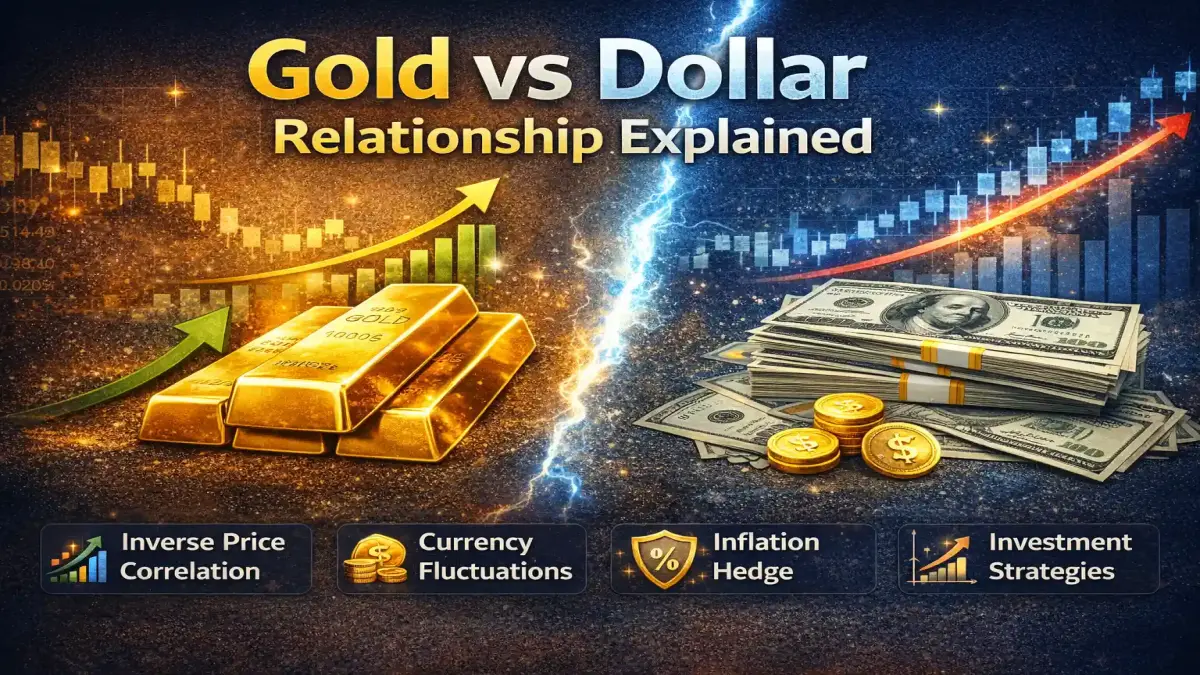
Gold vs Dollar Relationship Explained
Table of Contents
Gold vs Dollar Relationship Explained – Complete 2026 Guide for Smart Investors
The relationship between gold and the US dollar is one of the most important and widely discussed topics in global finance. Whether you are a beginner investor, a gold buyer, or someone tracking market trends, understanding how gold behaves in relation to the US dollar can give you a significant advantage.
Gold is not just a metal—it is a global financial asset, a hedge against inflation, and a safe haven during uncertain times. On the other hand, the US dollar is the world’s dominant reserve currency. The interaction between these two powerful assets creates a dynamic relationship that influences economies, markets, and investment strategies worldwide.
In this detailed guide, we will break down the gold vs dollar relationship in simple terms, explore why it exists, analyze historical trends, and show you how to use this knowledge to grow your wealth.
Understanding the Basics of Gold and the US Dollar
What is Gold in Financial Terms?
Gold has been used as a store of value for thousands of years. Unlike paper currencies, gold has intrinsic value and is not controlled by any single government or central authority.
- Acts as a hedge against inflation
- Maintains value over long periods
- Highly liquid and globally accepted
- Used by central banks as reserve assets
What is the US Dollar?
The US dollar (USD) is the most powerful and widely used currency in the world. It is used in international trade, foreign exchange reserves, and global transactions.
- World’s primary reserve currency
- Used in global trade settlements
- Controlled by the Federal Reserve
- Impacts global economic stability
What is the Gold vs Dollar Relationship?
The gold vs dollar relationship refers to how gold prices react to changes in the value of the US dollar. In most cases, gold and the dollar move in opposite directions.
- When the US dollar strengthens → Gold prices fall
- When the US dollar weakens → Gold prices rise
This inverse correlation is one of the most consistent patterns in financial markets.
Why Gold and the Dollar Move in Opposite Directions
1. Gold is Priced in US Dollars
Gold is traded internationally in USD. When the dollar becomes stronger, gold becomes more expensive for foreign buyers, reducing demand.
2. Purchasing Power Effect
A stronger dollar increases purchasing power, making gold less attractive. A weaker dollar reduces purchasing power, increasing gold demand.
3. Safe Haven Demand
During economic uncertainty, investors move money into gold because it is considered a safer asset compared to currencies.
4. Interest Rate Influence
When interest rates rise, investors prefer interest-bearing assets, strengthening the dollar and reducing gold demand.
5. Inflation Hedge
Gold protects against inflation. When inflation rises and the dollar weakens, gold prices typically increase.
Detailed Example to Understand the Relationship
Let’s take a practical scenario:
- If the US Federal Reserve increases interest rates → USD becomes stronger → Gold prices fall
- If inflation increases → USD weakens → Gold prices rise
This is why traders closely monitor economic data before investing in gold.
Major Factors That Influence Gold and Dollar Relationship
1. Federal Reserve Policies
The Federal Reserve controls interest rates and money supply. These decisions directly impact the strength of the dollar.
2. Inflation Levels
High inflation reduces the value of the dollar, making gold more attractive.
3. Economic Growth
Strong economies support a strong dollar, while weak economies boost gold demand.
4. Global Crises
Events like wars, pandemics, and financial crashes increase gold demand.
5. Currency Exchange Rates
Fluctuations in global currencies affect both gold and USD movements.
Historical Analysis of Gold vs Dollar
Looking at history helps us understand this relationship better.
2008 Financial Crisis
During the global financial crisis, investors lost confidence in currencies and moved to gold, pushing prices higher.
COVID-19 Pandemic
Gold reached record highs as economic uncertainty increased worldwide.
Strong Dollar Periods
During periods of economic growth in the US, the dollar strengthens and gold prices decline.
Gold vs Dollar in the Indian Market
For Indian investors, the relationship becomes even more important because gold prices depend on both USD and INR.
- USD strengthens → Gold price increases in India
- INR weakens → Gold becomes more expensive
This dual effect makes gold a valuable asset in India.
Investment Strategies Based on Gold vs Dollar
1. Buy Gold During Dollar Weakness
When USD weakens, gold prices usually rise, making it a good time to invest.
2. Diversify Portfolio
Investing in both gold and USD-based assets reduces risk.
3. Long-Term Investment
Gold performs well over the long term, especially during inflation.
4. Monitor Economic Indicators
Track interest rates, inflation, and global events regularly.
Common Myths About Gold and Dollar Relationship
- Gold always rises – False
- Dollar will collapse completely – Myth
- Gold is risk-free – Not true
Future Outlook of Gold vs Dollar
The relationship between gold and the dollar will continue to play a major role in global markets. However, new factors like digital currencies, geopolitical shifts, and economic policies may influence trends.
Expert Tips for Investors
- Always track USD trends
- Invest during market dips
- Use systematic investment strategies
- Stay updated with global news
Conclusion
The gold vs dollar relationship is a fundamental concept that every investor must understand. By analyzing how these two assets interact, you can make better financial decisions and protect your wealth.
Gold remains a safe and reliable investment, while the US dollar continues to dominate global markets. A balanced strategy that includes both can help you achieve long-term financial success.







0 Comments