Gold Price Crash or Boom? What War and Inflation Signals Say
Table of Contents
Gold Price Crash or Boom? What War and Inflation Signals Say
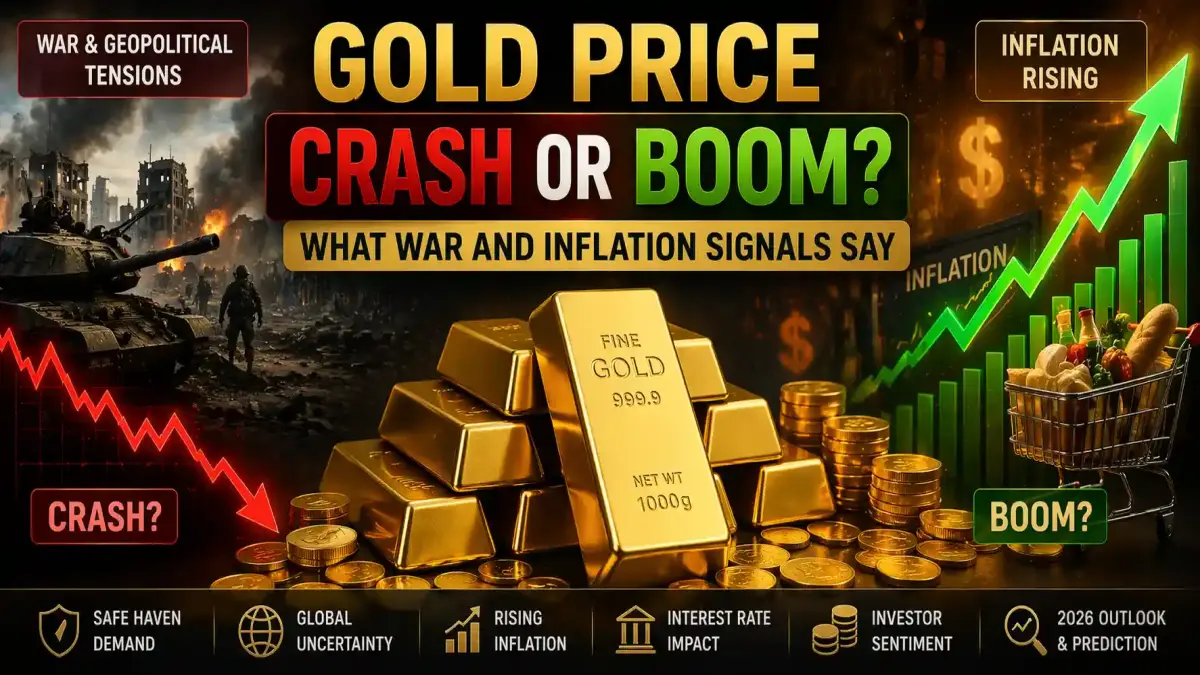
Will Gold Crash or Boom in 2026?
Gold is more likely to boom in the long term due to inflation and global conflicts, but short-term corrections and volatility are expected.
Gold has always been a central asset in global finance, especially during times of uncertainty. In 2026, investors are asking a crucial question: will gold prices crash or continue to boom? The answer is not straightforward, as gold prices are influenced by a complex combination of economic, geopolitical, and financial factors.
Two of the most powerful drivers shaping gold prices today are global conflicts and inflation. These forces not only influence investor sentiment but also impact currency values, interest rates, and overall economic stability. Understanding how these elements interact is essential for predicting whether gold will experience a crash or a boom in the coming years.
The Role of War in Gold Price Movements
War and geopolitical tensions have historically played a significant role in driving gold prices higher. During times of conflict, financial markets become unstable, and investors seek safer assets to protect their wealth. Gold, being a universally recognized store of value, becomes the preferred choice.
In 2026, ongoing geopolitical tensions and regional conflicts continue to create uncertainty in global markets. This uncertainty increases demand for gold, pushing prices upward. Additionally, wars often lead to increased government spending and economic instability, further supporting gold prices.
Why Gold Rises During War
- Increased uncertainty in financial markets
- Shift from risky assets to safe-haven investments
- Currency instability and inflation
- Disruption of global trade and supply chains
Inflation as a Key Driver
Inflation is one of the most important factors affecting gold prices. When inflation rises, the purchasing power of money decreases. This makes gold an attractive investment, as it helps preserve value over time.
In recent years, rising energy costs, supply chain disruptions, and economic policies have contributed to higher inflation levels globally. As a result, demand for gold has increased, supporting its price growth.
Interest Rates and Their Impact
Interest rates have an inverse relationship with gold prices. When interest rates rise, investors tend to move their money into interest-bearing assets such as bonds, reducing demand for gold. This can lead to short-term price declines.
However, during periods of high inflation and economic uncertainty, the impact of interest rates may be less significant compared to the strong demand for safe-haven assets.
Currency Movements and Gold Prices
Gold is priced in US dollars globally, making currency movements a key factor in determining its price. A strong dollar can put pressure on gold prices, while a weak dollar can boost demand and drive prices higher.
In 2026, fluctuations in the US dollar continue to influence gold price movements, adding another layer of complexity to market predictions.
Supply and Demand Dynamics
Gold supply is relatively limited, as it depends on mining and recycling. On the demand side, gold is used for investment, jewelry, and central bank reserves.
Increasing demand combined with limited supply creates upward pressure on prices, supporting long-term growth.
Short-Term Crash Scenarios
While the long-term outlook for gold remains strong, short-term corrections or crashes are possible under certain conditions.
- Sharp increase in interest rates
- Strong US dollar appreciation
- Economic stability reducing safe-haven demand
These factors can temporarily reduce demand for gold and lead to price declines.
Long-Term Boom Scenarios
Several factors support the possibility of a long-term gold price boom.
- Persistent inflation
- Ongoing geopolitical tensions
- Growing demand from central banks
- Limited supply growth
These factors create a strong foundation for long-term price increases.
Gold vs Other Assets During Crisis
During economic crises, gold often outperforms other assets such as stocks and real estate. Its ability to retain value makes it a reliable investment during uncertain times.
While other assets may offer higher returns during stable periods, gold provides protection and stability.
Investor Behavior in 2026
Investor behavior plays a crucial role in determining gold prices. In 2026, more investors are recognizing the importance of diversification and including gold in their portfolios.
This increased demand from retail and institutional investors supports gold’s price growth.
Risk Factors to Consider
- Market volatility
- Policy changes by central banks
- Economic recovery reducing demand
Investment Strategies
Diversification
Including gold in a diversified portfolio can reduce risk and improve stability.
Long-Term Investing
Holding gold for the long term allows investors to benefit from its growth potential.
Monitoring Economic Indicators
Keeping track of inflation, interest rates, and geopolitical events helps in making informed decisions.
Future Outlook
The future of gold prices will depend on the balance between inflation, interest rates, and global conflicts. While short-term fluctuations are inevitable, the long-term trend is likely to remain positive.
Investors who understand these dynamics will be better positioned to navigate market changes and capitalize on opportunities.
Conclusion
Gold is unlikely to experience a sustained crash in the long term due to strong demand driven by inflation and geopolitical tensions. While short-term corrections are possible, the overall outlook remains positive.
By adopting a balanced and informed investment strategy, investors can benefit from gold’s potential and use it as a key component of their financial planning.





0 Comments