
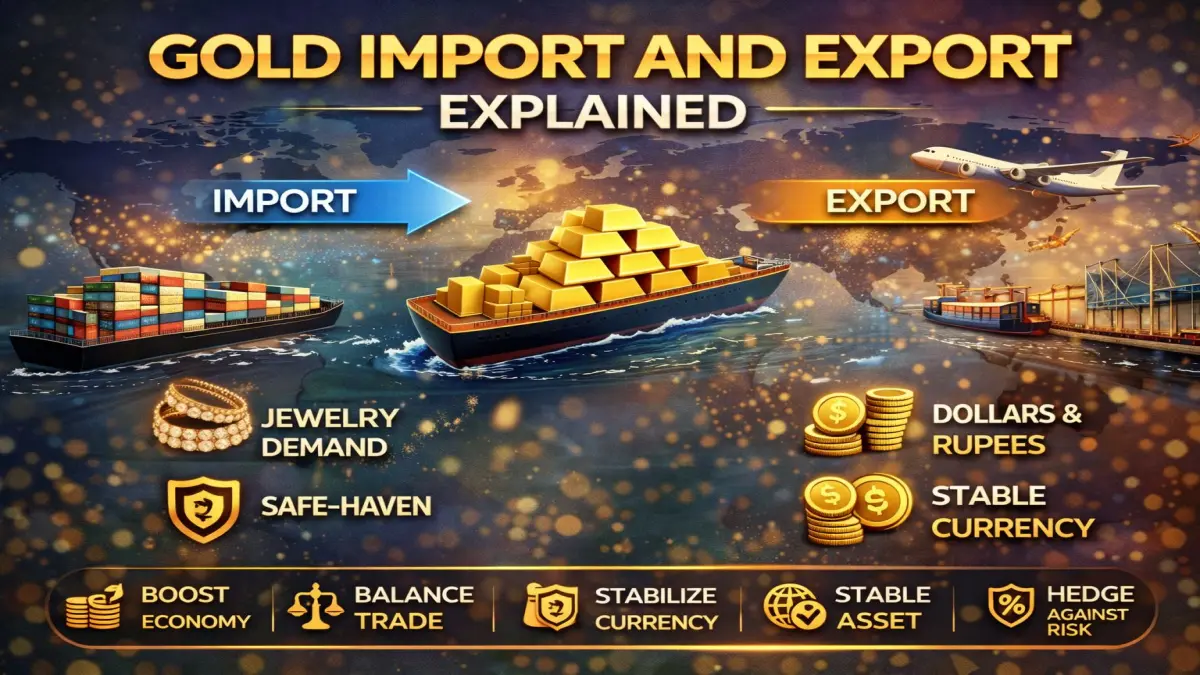
Gold Import and Export Explained
Table of Contents
Gold Import and Export Explained: Complete Global Trade Guide
Gold has always held a unique position in the global economy, functioning not only as a precious metal but also as a financial asset, cultural symbol, and economic stabilizer. While many people are familiar with buying gold jewelry or investing in gold coins, far fewer understand how gold actually moves across international borders. The global system of gold import and export is complex, deeply interconnected, and influenced by economic policies, currency movements, and demand patterns. This article provides a complete explanation of gold import and export, helping readers understand how global trade affects prices, availability, and investment opportunities.
Gold does not remain confined to the country where it is mined. Instead, it travels through a global network involving mining nations, refining hubs, trading centers, and consumer markets. Each step in this journey adds value and introduces regulatory oversight. Governments track gold movement carefully because it directly impacts foreign exchange reserves, trade deficits, and monetary stability. For investors, understanding these movements can provide valuable insights into future price trends and market behavior.
What is Gold Import and Export
Gold import refers to the process of bringing gold into a country from international markets to meet domestic demand. Gold export, on the other hand, involves sending gold from one country to another, usually from nations with strong mining or refining industries. These activities are governed by trade policies, taxes, and regulatory frameworks designed to ensure transparency and economic balance.
For example, countries with high demand but limited natural resources depend heavily on imports. Meanwhile, gold-rich nations export large quantities to generate revenue. This creates a continuous global flow that balances supply and demand across regions.
Global Gold Supply Chain
The journey of gold begins with mining, followed by refining, trading, and distribution. Gold is extracted from mines in countries like Australia and South Africa. It is then transported to refining hubs such as Switzerland, where it is purified and converted into standard bars. These bars are traded internationally and eventually distributed to importing countries.
This supply chain involves multiple stakeholders, including mining companies, governments, banks, and traders. Each participant plays a role in ensuring the efficient movement of gold across borders.
Why Countries Import Gold
Countries import gold primarily to meet domestic demand that cannot be satisfied by local production. In nations like India, gold holds cultural significance and is widely used in weddings and festivals. Additionally, gold is considered a safe investment, leading to consistent demand throughout the year.
Another reason for importing gold is industrial use. Gold is used in electronics, medical devices, and advanced technologies. As industries grow, the demand for gold increases, making imports necessary.
Main Reasons for Imports
- High consumer demand
- Limited domestic production
- Industrial applications
- Investment demand
Why Countries Export Gold
Gold-exporting countries typically have abundant natural resources or strong refining capabilities. These nations extract gold from mines and sell it in international markets to generate revenue. Exporting gold contributes significantly to economic growth and strengthens foreign exchange reserves.
Refining hubs also play a major role in exports. Countries like Switzerland import raw gold, refine it, and export it globally. This process adds value and ensures that gold meets international quality standards.
Major Gold Importing Nations
India and China are among the largest gold importers in the world. Their massive populations and strong cultural demand drive consistent imports. Other countries, such as Turkey and the United Arab Emirates, act as trading hubs, importing gold and redistributing it to other regions.
These countries influence global demand patterns and play a critical role in determining price trends.
Major Gold Exporting Nations
Australia, Russia, and South Africa are leading gold exporters due to their strong mining industries. These countries supply large quantities of gold to global markets, ensuring a steady flow of supply.
Switzerland stands out as a refining powerhouse, exporting gold after processing it. This highlights the importance of value addition in the global gold trade.
Impact of Import Duties
Import duties significantly affect the price of gold in importing countries. Governments impose these duties to control demand and manage trade deficits. When import duties increase, the cost of gold rises, making it more expensive for consumers.
For instance, higher duties in India often lead to reduced demand and increased smuggling activities. This demonstrates how policy decisions can influence market behavior.
Currency Exchange and Gold Trade
Gold is traded globally in US dollars, making currency exchange rates a crucial factor. A strong dollar increases the cost of gold for importing countries, while a weaker dollar makes gold more affordable.
Currency fluctuations can have a direct impact on domestic prices, even if global prices remain stable.
How Imports Affect Gold Prices
When imports increase, supply improves, which can stabilize or reduce prices. However, restrictions on imports can create shortages, leading to higher prices. This balance between supply and demand is a key factor in price determination.
Local factors such as taxes and currency value further influence the final price paid by consumers.
Regulations in Gold Trade
Governments regulate gold import and export through licensing, quality standards, and reporting requirements. These regulations help prevent illegal activities and ensure that gold meets international standards.
Strict monitoring also helps maintain economic stability and protects consumers.
Risks in Gold Import and Export
- Price volatility
- Currency fluctuations
- Policy changes
- Supply disruptions
Future of Gold Trade
The global gold trade is evolving with advancements in technology and changing consumer preferences. Digital platforms are making it easier to trade gold internationally, while governments are implementing stricter regulations to ensure transparency.
Sustainability is also becoming a key focus, with increased demand for ethically sourced gold. This shift is expected to influence trade patterns in the coming years.
Conclusion
Gold import and export are essential components of the global economy, influencing prices, supply, and investment opportunities. Understanding how gold moves across borders provides valuable insights into market trends and helps investors make informed decisions.
By considering factors such as import duties, currency exchange, and global demand, individuals can better understand price movements and optimize their investment strategies. Gold remains a timeless asset, and its global trade ensures its continued importance in the financial world.






0 Comments