Global Gold Demand Explained
Table of Contents
Global Gold Demand Explained: A Complete Deep Guide for Smart Investors
Gold has always been more than just a precious metal. It represents trust, stability, and long-term financial security across generations and economies. From ancient civilizations that used gold as currency to modern investors who use it as a hedge against inflation, gold continues to play a powerful role in the global financial system. Understanding global gold demand is not just important for investors, but also for anyone interested in how economies behave during times of growth and uncertainty. Gold demand is influenced by multiple factors including cultural habits, economic cycles, geopolitical risks, and technological advancements. When you understand how and why gold demand changes, you gain a major advantage in making better investment and financial decisions.
In simple terms, global gold demand refers to the total quantity of gold purchased worldwide across different sectors over a specific period. This demand is not driven by a single factor but rather a combination of emotional, financial, and strategic reasons. Some people buy gold for tradition and jewelry, others buy it for safety during uncertain times, and governments accumulate gold to strengthen their reserves. Each of these actions contributes to the overall demand, making gold one of the most unique and dynamic assets in the world.
Understanding the Core Components of Global Gold Demand
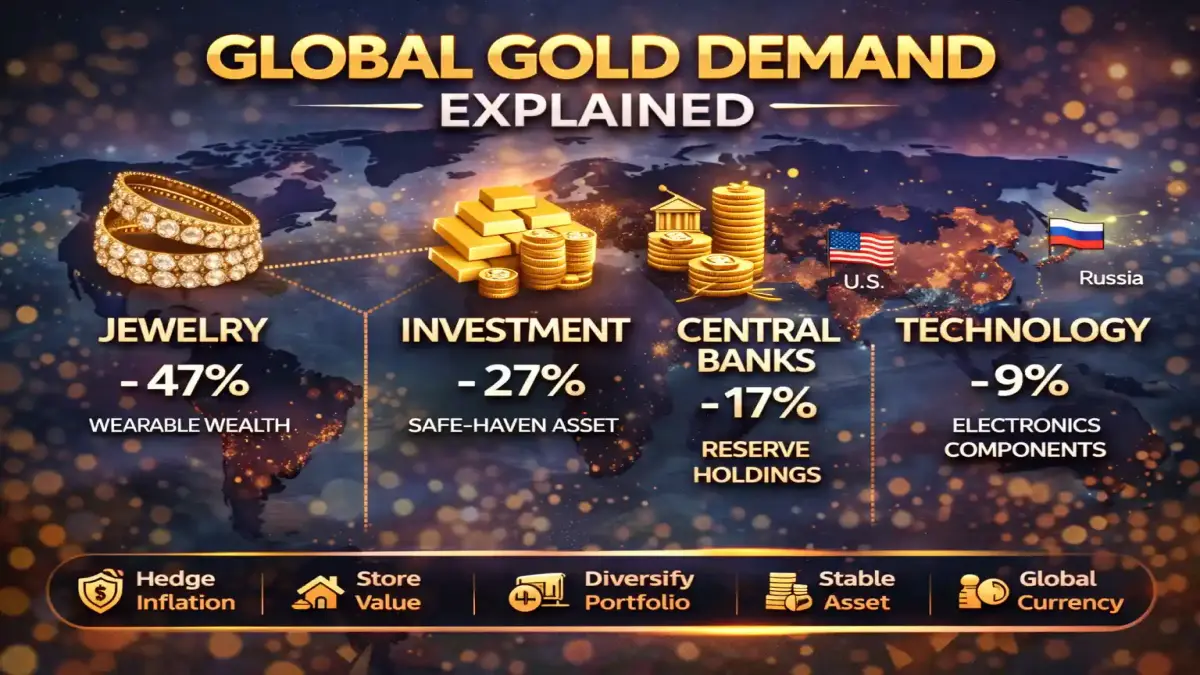
To truly understand global gold demand, it is essential to break it down into its main components. These include jewelry demand, investment demand, central bank demand, and industrial or technology demand. Each segment behaves differently and reacts to different economic conditions. Together, they create a balanced demand system that supports the global gold market.
Jewelry Demand and Its Emotional Value
Jewelry demand is the largest contributor to global gold consumption. This is especially true in countries like India and China, where gold jewelry is deeply connected to culture, religion, and social status. In India, gold is not just an ornament but a form of financial security. Families often buy gold during weddings, festivals, and important life events. This consistent demand creates a strong base for the global gold market.
For example, during wedding seasons in India, gold demand increases significantly because families invest heavily in jewelry. Even in rural areas, gold is considered a reliable way to store wealth, especially in places where access to banking services is limited. This emotional and cultural connection ensures that jewelry demand remains stable over the long term, even when prices fluctuate.
Investment Demand and Wealth Protection
Investment demand is one of the fastest-growing segments in the gold market. Investors purchase gold to protect their wealth from inflation, currency depreciation, and market volatility. Unlike stocks or real estate, gold does not depend on company performance or economic growth, which makes it a safer option during uncertain times.
For instance, when inflation rises and the value of money decreases, investors shift their funds into gold to preserve purchasing power. Similarly, during stock market crashes or economic crises, gold prices often rise because more people are buying it as a safe haven. This behavior makes gold an essential part of diversified investment portfolios.
Central Bank Demand and Economic Strategy
Central banks are major players in the global gold market. They buy and hold gold as part of their national reserves to ensure economic stability. Gold acts as a backup asset that can support a country’s currency during financial crises. Unlike paper currencies, gold has intrinsic value, which makes it a reliable reserve asset.
In recent years, many countries have increased their gold reserves to reduce dependence on foreign currencies. This trend highlights the importance of gold in maintaining financial security at a national level. When central banks increase their gold purchases, it often signals strong confidence in gold’s long-term value.
Technology Demand and Industrial Usage
Although smaller compared to other segments, technology demand plays a steady role in gold consumption. Gold is widely used in electronics because of its excellent conductivity and resistance to corrosion. It is commonly found in smartphones, laptops, medical devices, and even space technology.
As technology continues to evolve, the demand for gold in industrial applications is expected to grow gradually. While this segment does not cause major price fluctuations, it provides a stable base that supports overall demand.
Key Countries Driving Global Gold Demand
Gold demand is not evenly distributed across the world. Certain countries play a much larger role due to cultural preferences, economic conditions, and investment habits. Understanding these regional differences helps investors predict market trends more accurately.
India is one of the largest consumers of gold globally. The demand is primarily driven by jewelry and cultural traditions. Gold is considered auspicious and is often purchased during festivals and weddings. Additionally, many people in India use gold as a form of savings, especially in rural areas.
China is another major contributor to global gold demand. The country has a strong appetite for both jewelry and investment gold. With a growing middle class and increasing financial awareness, gold demand in China continues to rise steadily.
The United States focuses more on investment demand rather than jewelry. Investors in the US prefer gold ETFs and financial instruments that allow them to gain exposure to gold without physically holding it. This makes the US a key player in the investment segment of gold demand.
Factors That Influence Global Gold Demand
Several factors influence how much gold is demanded globally. These factors are interconnected and often change based on economic conditions and global events. Understanding them helps in predicting future trends.
Inflation and Purchasing Power
Inflation is one of the biggest drivers of gold demand. When inflation rises, the value of currency decreases, and people look for assets that can preserve their purchasing power. Gold has historically performed well during inflationary periods, making it a preferred choice for investors.
Interest Rates and Opportunity Cost
Interest rates also play a crucial role in gold demand. When interest rates are low, the opportunity cost of holding gold decreases because other investments like fixed deposits or bonds offer lower returns. This makes gold more attractive to investors.
Global Uncertainty and Risk
During times of geopolitical tension or economic instability, gold demand increases significantly. Investors turn to gold as a safe asset that can protect their wealth from unexpected risks. Events such as financial crises or global conflicts often lead to a surge in gold demand.
Real-Life Scenario to Understand Gold Demand
Imagine a situation where global markets are unstable, inflation is rising, and stock prices are falling. In such a scenario, investors start losing confidence in traditional assets. To protect their wealth, they begin investing in gold. At the same time, central banks may also increase their gold reserves to strengthen their economies. This combined demand leads to a significant increase in gold prices.
On the other hand, during periods of economic growth, investors may prefer stocks and real estate because they offer higher returns. As a result, gold demand may decrease temporarily. These cycles are natural and highlight the importance of understanding market behavior.
Emerging Trends in Global Gold Demand
The gold market is evolving with changing technology and investor preferences. One of the most important trends is the rise of digital gold. This allows investors to buy small quantities of gold online without worrying about storage or security. Digital platforms have made gold more accessible, especially for younger investors.
Another trend is the increasing popularity of gold ETFs. These financial instruments provide exposure to gold prices without requiring physical ownership. This has made gold investment more convenient and liquid.
Future Outlook of Gold Demand
The future of global gold demand looks strong due to increasing economic uncertainty and growing awareness among investors. As more people understand the importance of diversification, gold is likely to remain a key component of investment portfolios.
Additionally, central banks are expected to continue accumulating gold reserves, which will support long-term demand. Technological advancements and digital platforms will further enhance accessibility, making gold investment easier for everyone.
Common Mistakes to Avoid
- Investing in gold without understanding market trends
- Buying gold during peak price periods
- Ignoring diversification in investment strategy
- Relying only on short-term price movements
Conclusion
Global gold demand is a complex but fascinating subject that reflects the behavior of individuals, institutions, and governments worldwide. It is influenced by cultural traditions, economic conditions, and financial strategies. By understanding how demand works and what drives it, investors can make better decisions and reduce risks.
Gold continues to be a reliable asset for wealth preservation and long-term financial planning. Whether you are a beginner or an experienced investor, understanding global gold demand can help you build a stronger and more secure financial future.






0 Comments